My Calling- Parent of Special Youth
I don’t want to rush to judgment about a case that is still under investigation, nor do I want to reduce the loss of a life to a single
label, one particular conflict, or the responsibility of any one person. The deceased deserves respect. The family deserves the truth.
And the public owes them restraint.
What has struck so many people about this tragedy is that it exposes a longstanding problem that is too often overlooked: when inclusive
education is introduced into preschools and schools without sufficient professional support, adequate staffing, effective communication
between families and schools, or strong administrative backing, frontline teachers inevitably become the ones who absorb every pressure.
Inclusive education has never simply meant placing children with special needs into mainstream classrooms.
Its true purpose is not merely physical integration or putting different children in the same room. Genuine inclusion is about creating an environment in which every life involved can flourish.
Children with special needs should receive a more compassionate, supportive, and accepting environment in which to grow.
Typically developing children should learn to recognize differences, respect diversity, and develop empathy.
Teachers, through their daily work, should rediscover the true meaning of education—that education is not simply about imparting knowledge, but about nurturing lives, supporting lives, and helping each person become who they are meant to be.
Parents, too, should come to understand that every human life possesses inherent worth. No one needs to earn the right to exist or prove their value. Life itself is sacred—a precious gift from God.
Achieving this ideal is extraordinarily difficult.
Even in the United States, which is often regarded as having one of the world’s more developed systems of support for people with disabilities, reality still falls far short of this vision. Laws can protect certain rights. Professional expertise can provide effective methods. But creating a truly warm, understanding, and inclusive environment still requires the collective effort of families, teachers, specialists, communities, and society as a whole.
The fact that perfection is difficult does not mean we should stop trying.
On the contrary, precisely because it is difficult, we should continue asking ourselves:
What is the true value of human life?
In an age of unprecedented technological progress and material abundance, how should we redefine human dignity?
How can we use technology and public policy to build a society that is more compassionate, more civilized, and more inclusive—one in which everyone, especially those who are most vulnerable, can share in the benefits of social progress?
The law of the jungle—survival of the fittest—is far too cold.
True strength should never be measured by one’s ability to seize resources from others. Rather, those with strength have the ability, the responsibility, and the moral obligation to protect and support those who are weaker.
The true measure of a civilized society lies in how it treats those who are most easily overlooked, misunderstood, or left behind.
I believe this because I have lived it myself.
For years, I have raised my younger son, who is on the autism spectrum, largely on my own in the United States.
The hardships of that journey are difficult to put into words.
There was a time when I believed I would spend the rest of my life carrying deep regret, never truly experiencing the joy of motherhood. I thought I was destined to remain trapped in a prison of fear and darkness—loving my child while being consumed by helplessness, fear, guilt, and loneliness.
But time has a remarkable way of healing.
And God’s grace has transformed my life in ways I never imagined possible.
Today, I no longer struggle in that darkness.
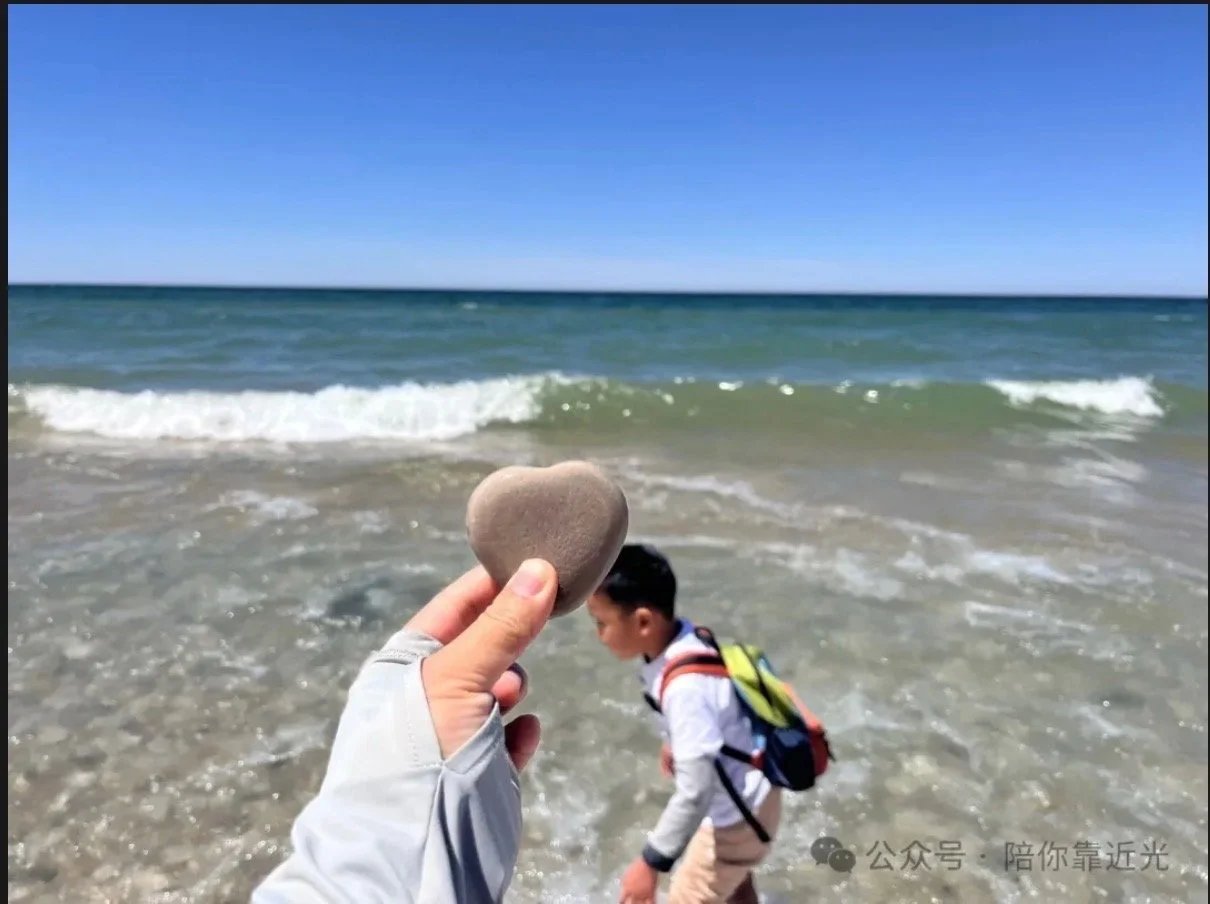
My son and I now live freely in the sunshine. We laugh wholeheartedly. We embrace life.
I have even come to be grateful that he chose me to be his mother.
Because of him, I was forced to slow down and reconsider the deepest questions of life—love, responsibility, suffering, and hope.
And because of him, I ultimately found the true source of my strength, along with genuine freedom and peace.
That is why I have decided to share this deeply personal story.
Not because I have found all the answers.
Not because I am stronger than anyone else.
But because I have truly experienced brokenness—and I have also experienced hope being born from that brokenness.
If my story can offer even a little comfort or hope to parents, families, or children who are still struggling in the darkness, then sharing it is worthwhile.
My own experience as a mother has convinced me that family relationships and the home environment profoundly shape a child’s development.
The moment we bring a child into this world, we accept the responsibility to love, nurture, and support them.
We should never love our children because they are adorable, intelligent, successful, or meet our expectations.
We love them first and foremost because they are our children.
Every child, regardless of their natural abilities or challenges, has tremendous potential when given the right support.
Authentic, unconditional love allows a child who may appear broken or limited to gradually grow, develop a healthy sense of self, and discover a life uniquely their own.
They, too, can live lives that are rich, beautiful, and meaningful.
But such an environment does not appear on its own.
Someone must choose to see these children, understand them, advocate for them, and build that environment together.
The support system that exists for people with disabilities in the United States today did not appear overnight.
It was built over decades through the perseverance of countless parents, educators, therapists, advocates, researchers, and organizations.
Likewise, families in China should not lose hope.
We, too, can step forward courageously—not only to seek better support for our own children, but to make the path easier for those who will come after us.
I have lived in the United States for more than thirteen years.
For a long time, I thought what I was pursuing was stability, financial security, and personal achievement.
Looking back now, I realize that the greatest gift God ever gave me was my “little angel with broken wings.”
Although that gift appeared rough and unexpected on the outside, it has become the most precious blessing of my life.
Through him, I began searching for life’s deepest meaning.
I experienced profound inner transformation and spiritual rebirth.
I came to know my Creator in a personal way, and in that relationship I found comfort, protection, and grace beyond anything I had imagined.
Today, I truly accept myself.
I no longer need the approval of others to validate my worth.
I know with complete confidence that I am a good mother, a good wife, a good daughter, a good daughter-in-law, a good employee, and a good friend.
God has faithfully cared for every part of my life.
Because of Him, I feel deeply content.
I no longer feel that anything essential is missing.
I have also become increasingly certain of the direction my future should take:
To invest in relationships.
To love people.
To help people.
To contribute, in whatever way I can, to building a more just and compassionate society.
At last, I am free from living under the power of fear.
Now I can choose freely.
And I willingly choose what appears to be the more difficult path because I believe it is the more meaningful one.
For the rest of my life, I hope to devote myself to advocating for people with disabilities and supporting families raising children with special needs—especially the mental health of mothers.
I want to become the kind of person who, having once stood in the rain, now chooses to hold an umbrella for others.
Perhaps this truly is the calling God prepared for my life.
As I prepare to leave behind everything I have built in America and begin a new chapter in Shanghai, one truth becomes increasingly clear:
None of my past experiences—the loneliness, the brokenness, the suffering, or the unanswered questions—were meaningless.
All of them have worked together to lead me to where I am today.
I hope to begin this work in Shanghai.
I want to become a bridge—connecting international resources, professional knowledge, practical experience, and the real needs of families.
Together with others who share this vision, I hope to promote scientific understanding, challenge long-held misconceptions, and help create a more welcoming and inclusive society.
Such an environment should not exist only in schools.
It should exist in families.
In neighborhoods.
And throughout society.
I dream of a day when children with disabilities are no longer seen merely as objects of pity.
When families are no longer forced to bear their burdens in isolation.
When every child is seen.
Every mother is supported.
And every family can rediscover hope through the help they deserve.
I am proud of who I have become.
Once, I devoted myself to creating a safe world for my own child.
Now, I hope to serve an even larger community.
I believe my family, my friends, and everyone who has supported me along the way will understand—and bless—this decision.
Finally, I want to thank all the friends and professionals, both in China and abroad, who have listened to me, encouraged me, and shared their expertise during this journey.
Your kindness and support have convinced me that this work is both worthwhile and necessary.
Before returning to Shanghai, I want to take the time to say goodbye to everything I have known in America.
Over the next two months, I will travel, visit friends and family, and enjoy the beauty of nature.
Though these experiences may look like a farewell, they are also a season of renewal.
The friendships I cherish and the landscapes I explore will become sources of strength for the road ahead.
I will not forget my calling.
Nor will I abandon my resolve.
I offer this essay as a declaration of that commitment.
May I remain steadfast in it for the rest of my life.